

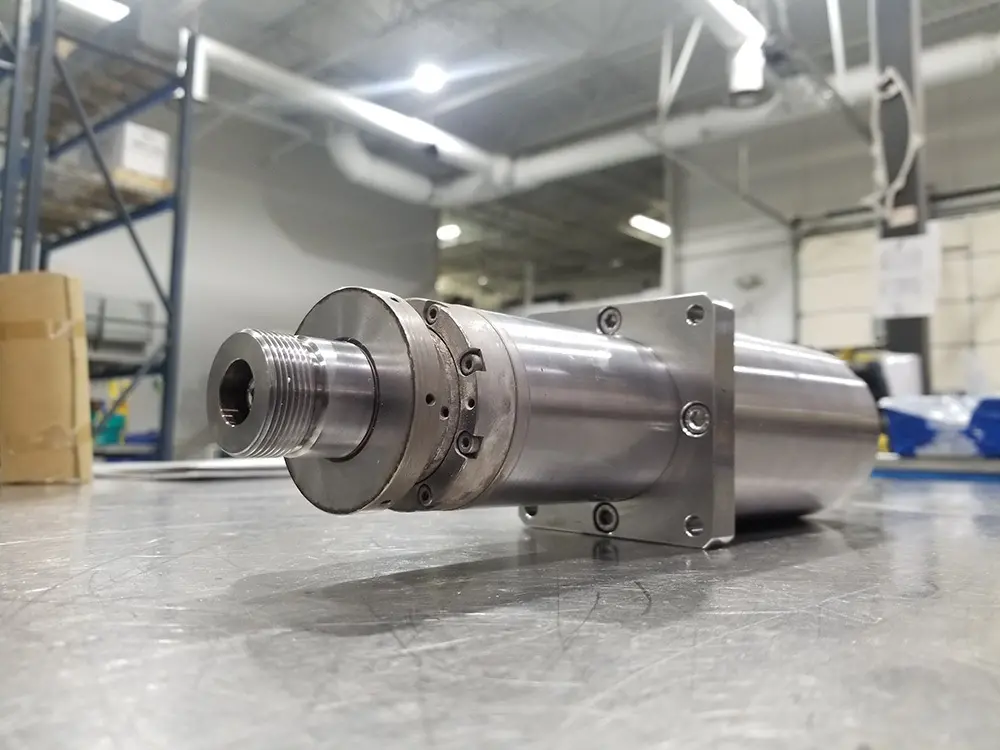
Noises are the language of spindle health. A subtle change in pitch or volume is usually the first — and sometimes the only — warning before catastrophic failure leading to downtime. Unplanned downtime can cause your operation’s productivity and profits to drop, even if it only lasts an hour. This spindle sound library for diagnostics will help differentiate between bearing growls, belt whines, and gear chatter to identify critical emergencies.
The spindle may make a whining or screaming sound — a piercing, consistent screech that often increases in pitch as RPM rises. The likely culprits of a squealing spindle are lubrication starvation or belt drive issues.
When spindles rotate at high speeds without adequate oil lubrication, the friction between the metal parts can create a scream-type noise. Worn drive belts slipping against pulleys create a similar high-frequency noise. If unaddressed, lubrication failure can create heat buildup, causing bearings to seize and the machine to fail.
High-pitched whining can be solved with a lube fix or belt change and prevented with a predictive maintenance program from Setco.
A rumbling sound from spindles starts as a vibration that can be felt through the floor and develops into a low-frequency, gravelly sound. Deep growls are often caused by rolling element bearing wear, like brinelling or spalling.
Bearing races pit and wear over time with frequent use. As the balls and rollers bounce over these imperfections, a low rumble is created in the machine. Even though bearings are one of the most common causes of spindle noise, growling spindles need to be addressed immediately. When the bearing’s internal geometry is compromised, continued use will also damage the shaft and housing.
If your machine is making rumbling sounds, stop using it immediately and schedule spindle repair services with Setco.
Chattering sounds like an inconsistent, pulsating, buzzing noise during the cut, not idling. Rhythmic chatter in spindles has two possible causes — tooling imbalance or loss of stiffness, also called preload.
While growls are a sign of internal wear, chatter is a sign of a system issue. When spindles lose their rigidity, they bounce against the workpiece, harming the surface finish and breaking tools. This problem can result in poor part quality, high scrap rates and more frequent tool replacement.
The technicians at Setco will help identify the cause of your spindle’s buzzing noise. If it’s a tooling issue, we’ll repair it as soon as possible. We can also make preload adjustments to restore stiffness.
A clicking or ticking sound from a spindle usually indicates failing bearings, loose or dirty tool holder, loose hardware, loose drawbar or an issue with the drawbar mechanism
Setco will immediately inspect the cause for the knocking or clicking sounds of your spindle and repair issues or defects right away.
Listening to your machine is step one in repairing — step two is scheduling a spindle repair with Setco. Our repairs involve a root cause analysis to verify the reason for failure. This process often involves a vibration analysis that allows us to see the frequency to pinpoint the defect. As a result, we can make an effective repair that will prevent future issues.
When your machine is making unusual noises, turn to Setco for professional repairs. Contact our technicians to request a spindle repair quote today.