

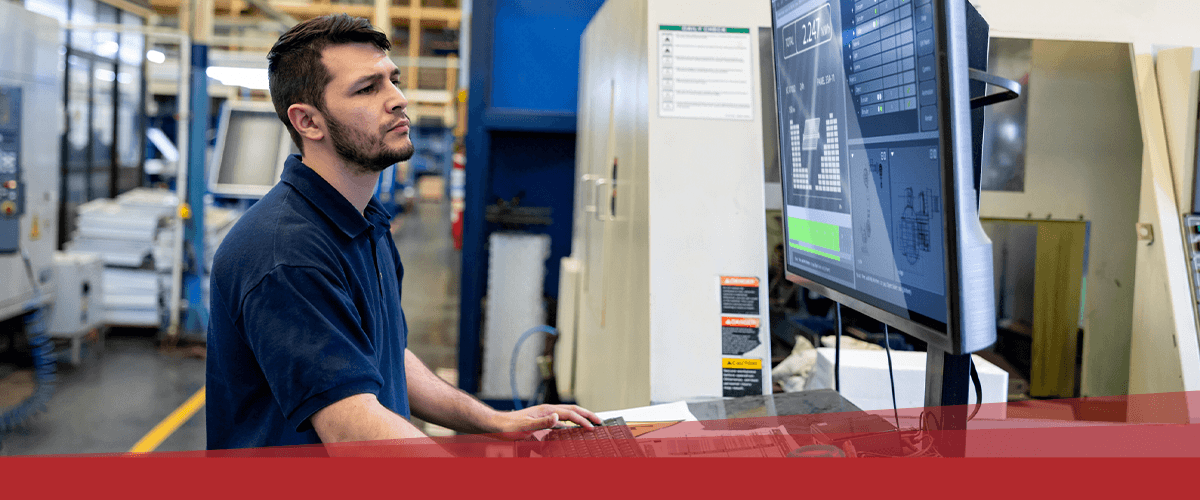
Today’s manufacturing professionals understand that success on the shop floor depends on the precise performance and reliability of machine tools. A CNC machining center is an advanced manufacturing platform that integrates computer-controlled precision with automated processes like cutting and drilling to produce high-quality parts.
While you may be familiar with this industry term, a truly productive operation demands more than surface-level knowledge. Unpacking the intricate relationships between the core systems, including: control technologies, spindle assemblies, and advanced tooling, can unlock the potential to maximize uptime and overall return on investment.
Explore the foundational principles and advanced strategies that manufacturing teams need, to get the most from CNC machining centers as a key capital investment.
A CNC machining center combines high-speed cutting, automated tool changing, and intelligent control systems into a single, versatile unit. Unlike conventional milling machines or lathes, which often require manual intervention and frequent tool changes, its comprehensive design enables the production of complex parts with exceptional consistency and minimal downtime.
Yet, what is a CNC turning center — and how does it differ from a CNC machining center?
While both machining centers and turning centers operate under computer control, their fundamental approaches differ. Turning centers rotate the workpiece against a stationary tool, ideal for producing cylindrical components. In contrast, machining centers keep the workpiece fixed while rotating the cutting tool, making them exceptionally versatile for intricate operations on a wide range of shapes and surfaces.
At the core of every machining center is a sophisticated computer controller. It executes precise tool movements, monitors process variables in real time, and coordinates every aspect of the machining cycle to ensure accuracy and repeatability, even in the most demanding applications.
The key components that most directly impacts performance and set a CNC machining center apart, include:
By combining advanced computer control with high-precision engineering, today’s CNC machining centers redefine what’s possible on the modern shop floor.
The diversity of machining center configurations available today gives manufacturers flexibility to match capacity, complexity, and throughput requirements. Whether the goal is rapid prototyping, high-volume manufacturing, or the precise machining of complex shapes, understanding these machine types is essential for selecting the solution best suited to production demands.
Vertical machining centers are among the most widely used CNC machining centers in modern manufacturing environments. In a VMC, the spindle is oriented vertically, allowing the cutting tool to approach the workpiece from above. This straightforward configuration suits a variety of tasks, making VMCs especially popular in mold and die manufacturing and for processing large plates or flat workpieces. Plus, the compact footprint fits well in job shops with limited space.
Horizontal machining centers position the spindle horizontally, offering significant benefits in high-production and automated environments. Their unique design enhances chip evacuation, preventing re-cutting debris and improving surface finish during continuous or unattended machining cycles.
HMC benefits include:
Because of these strengths, HMCs are a preferred solution for automotive, aerospace, and other sectors demanding high productivity and precision.
Advancements in CNC technology have led to the widespread use of 5-axis mills and multi-axis machining centers, especially for parts with complex geometries or critical surface features. In a 5-axis machining center, the cutting tool or workpiece can move along five independent axes, enabling the machining of intricate components in a single setup — capabilities beyond those of standard 3-axis machines.
Benefits of 5-axis and multi-axis machining for demanding manufacturing environments include:
Ensuring long-lasting, high-level performance from a CNC machining center requires a closer look at machine operations. The following best practices help sustain precision and productivity well into the future.
Routine attention to maintenance is the foundation of reliable machine operation. This proactive approach helps prevent unexpected breakdowns, ensure production targets and part quality standards are consistently met.
Beyond standard daily checks, a truly effective maintenance program should include:
Investing in optimal tooling and fixtures pays dividends. The right workholding solutions directly impact both throughput and part quality. For smoother operation, longer tool life, and higher surface quality, it’s essential to select:
The spindle is the linchpin of any machining center’s performance. Declining spindle health can quietly erode productivity and quality. Key warning signs include:
Proactively addressing these issues before a full breakdown occurs is essential to avoid extended, costly downtime. For reliable diagnostics and restoration, partner with an experienced service provider like Setco. Setco’s expertise, as the largest independent spindle rebuilder, ensures that spindles are repaired to manufacturer specifications or better, preserving both productivity and equipment value.
Experiencing increased vibration, loss of accuracy, or declining surface quality from your CNC machining center? Don’t wait for costly unplanned downtime to halt production. Request a quote from Setco for quick, professional spindle repair and rebuild services. We can help restore your equipment, reconditioning worn components to original specifications or above.
Contact us today to protect your investment and maximize your CNC machining center’s productivity.