

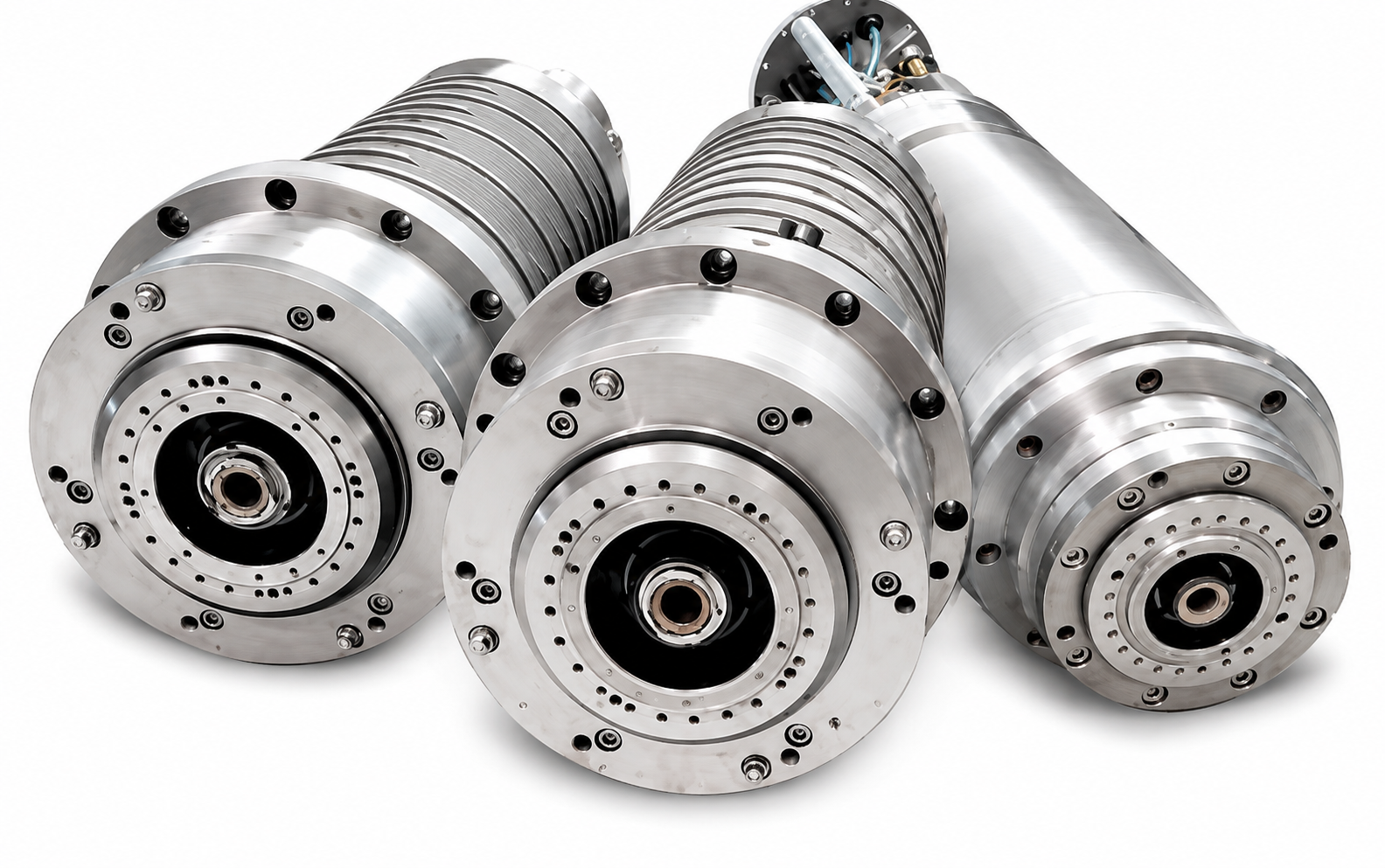
Automotive manufacturing depends on speed, precision, and repeatability. From engine blocks and cylinder heads to crankshafts, camshafts, transmission components, and electric vehicle parts, manufacturers rely on CNC machine tools to produce complex components within extremely tight tolerances.
At the center of many of these machining operations is the spindle.
When an automotive machining spindle develops excessive vibration, heat, runout, bearing damage, or another performance problem, the effects can spread throughout the production process. Surface finish may decline, dimensional accuracy may become inconsistent, tool life may decrease, and an unexpected spindle failure can bring operations to a grinding halt.
For Automotive August, Setco is highlighting the critical role that dependable CNC spindles play in automotive manufacturing, and how professional spindle repair and rebuilding can help manufacturers restore performance, reduce downtime, and protect production quality.
Automotive production environments place demanding workloads on machine tools. Equipment may operate across multiple shifts, while producing thousands of highly consistent parts. Even a relatively small spindle problem can create significant production consequences when it affects a high-volume machining line.
Precision spindles are used throughout automotive CNC machining for operations such as:
These applications require more than rotational speed. Automotive machining spindles must also maintain accuracy, rigidity, balance, proper bearing preload, and thermal stability under demanding production conditions.
When spindle performance begins to decline, manufacturers may experience poor surface finishes, dimensional variation, premature tool wear, increased scrap, slower cycle times, or complete machine downtime.
Spindle problems don’t always begin with a sudden breakdown. Generally, a spindle produces at least some warning signs before a major failure occurs.
Automotive manufacturers and machine operators should watch for symptoms like:
Continuing to operate a damaged spindle can increase the extent and cost of the eventual repair. Early evaluation gives maintenance teams a better opportunity to address the underlying problem before it causes secondary damage or interrupts production.
When a CNC spindle fails, every hour of lost production can affect output, scheduling, labor utilization, and customer commitments. We help automotive manufacturers restore machine performance through precision spindle repair and rebuilding services.
Rather than addressing only the immediate symptom, our technicians perform a detailed inspection and failure analysis to determine why the spindle failed. This root-cause approach helps identify issues like contamination, lubrication problems, improper bearing preload, taper damage, crash damage, electrical failure, or operating conditions that could lead to another breakdown.
The goal is not simply to make the spindle rotate again, it’s to restore the accuracy, reliability, and performance required for demanding automotive machining applications.
Every spindle repair begins with a careful evaluation of the unit’s condition and operating history. Depending on the spindle design and failure, our repair process may include the following services:
The spindle is disassembled, cleaned, inspected, and evaluated to identify the likely cause of failure. Components are checked for damage, wear, contamination, improper fits, and other conditions that may have affected performance.
Understanding the root cause is especially important in automotive manufacturing, where a recurring failure can disrupt a high-volume production line more than once.
Bearings are critical to spindle accuracy, speed, rigidity, and service life. When replacement is required, we select precision bearings appropriate for the spindle design and application.
Correct bearing selection, installation, preload, lubrication, and run-in procedures help the rebuilt spindle maintain stable performance under production conditions.
A worn or damaged spindle taper can affect tool-holder contact, runout, machining accuracy, and surface quality. We can restore spindle taper geometry for common interfaces such as CAT, BT, HSK, ISO, and custom configurations.
Correcting taper damage can help automotive machine shops improve tool holding, reduce runout, and restore consistent part quality.
Imbalance can generate vibration, increase bearing loads, reduce tool life, and compromise machined surfaces. Dynamic balancing helps the spindle operate more smoothly throughout its intended speed range.
This is particularly valuable for automotive machining operations that require repeatable finishes and stable performance during long production runs.
After rebuilding, the spindle is tested and run through a controlled operating process.
Depending on the spindle configuration, technicians may monitor factors such as vibration, temperature, speed, lubrication performance, electrical operation, and thermal behavior.
This testing helps verify that the spindle is ready to return to service before it’s shipped back to the customer.
Automotive facilities often operate equipment from multiple machine-tool manufacturers. A single plant may use different CNC machining centers, turning centers, grinders, transfer lines, and specialized machines throughout its production process.
Setco repairs and rebuilds spindles from more than 350 machine-tool brands, including:
This broad service capability gives automotive manufacturers access to a single spindle-repair resource for numerous machine brands and spindle configurations.
Kessler spindles are used across many demanding CNC manufacturing environments. When a Kessler spindle begins showing vibration, noise, heat, taper runout, or declining machining accuracy, we can inspect and rebuild the unit to restore reliable performance.
Common Kessler spindle problems may include:
Our Kessler spindle repair process includes teardown, inspection, root-cause analysis, precision rebuilding, and testing based on the spindle’s design and condition.
Okuma machining centers and turning machines support a wide variety of automotive component operations. When an Okuma spindle develops excessive vibration, poor surface finish, thermal instability, taper damage, or bearing wear, prompt service can help prevent additional damage and extended downtime.
We provide Okuma spindle repair and rebuild services focused on restoring accuracy, mechanical condition, and dependable production performance.
Engineering and reverse-engineering resources are also available when replacement components are difficult to obtain or when additional spindle support is required.
Mori Seiki machine tools are used for milling, turning, boring, and other precision machining operations. We provide Mori Seiki spindle repair services for manufacturers seeking an experienced, independent rebuilding resource.
Potential Mori Seiki spindle issues include:
Each spindle is evaluated according to its actual condition so we can recommend an appropriate repair, rebuild, or component-reconditioning scope.
A failed spindle does not automatically require the purchase of a new replacement. In many situations, rebuilding the existing unit can restore its condition while helping the manufacturer avoid the cost and lead time associated with buying a replacement spindle.
The best decision depends on factors such as:
A professional spindle evaluation can help maintenance teams compare their options and make a more informed spindle repair-versus-replacement decision.
While not every spindle failure can be prevented, proactive monitoring and maintenance can help automotive manufacturers identify developing problems sooner.
Recommended practices include:
Machine operators are often the first people to notice changes in spindle behavior. Documenting and reporting those changes can help maintenance teams intervene before a developing problem becomes a catastrophic failure.
Our spindle repair services are supported by an ISO 9001:2015-certified quality management system. Documented repair and inspection processes help provide consistency and traceability throughout the rebuilding process.
Our precision CNC spindle repairs are also backed by a comprehensive one-year warranty, giving automotive manufacturers added confidence when returning repaired equipment to production.
For urgent production situations, expedited spindle-repair options may also be available.
Automotive CNC machining demands consistent spindle accuracy, reliability, and performance. When a spindle begins to fail, responding quickly can help manufacturers protect part quality, avoid secondary damage, and reduce the duration of unplanned downtime.
We provide automotive spindle repair and rebuilding for a wide range of CNC machining centers, turning centers, grinders, and specialized production equipment. Through detailed diagnostics, precision rebuilding, engineering expertise, and comprehensive testing, we help return machine-tool spindles to OEM specifications or better.
Is vibration, heat, noise, runout, or declining part quality indicating a spindle problem?
Contact us to request a spindle repair evaluation, no-obligation quote, or recommended scope of work.