

Few machine tool components impact productivity more than the spindle. When a spindle fails, manufacturers can face lost production, increased repair costs, and significant machining downtime.
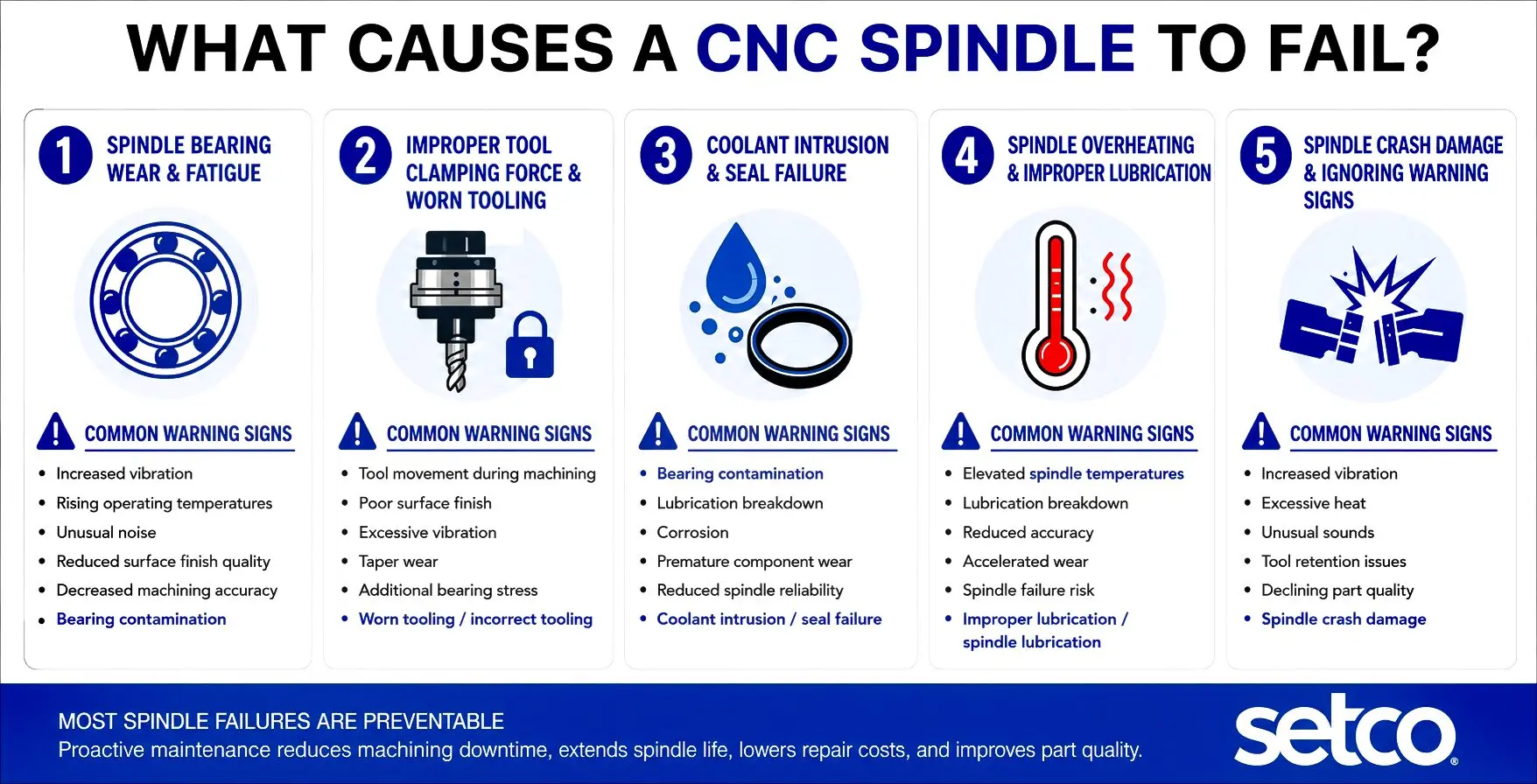
While spindle failures often appear sudden, most develop gradually through identifiable warning signs. Understanding the most common causes of spindle failure,and knowing how to prevent them,can help maintenance teams improve reliability, extend spindle life, and avoid costly interruptions.
Spindle bearing wear is one of the most common causes of spindle failure. Bearings operate under extreme speeds, loads, and temperatures, making them susceptible to fatigue over time. As wear progresses, manufacturers may experience:
In many cases, bearing contamination from chips, dirt, coolant, or other foreign materials can accelerate bearing deterioration and significantly shorten spindle life.
While bearing wear is inevitable over time, manufacturers can significantly extend bearing life through proactive maintenance practices:
Early detection and corrective action can prevent minor bearing degradation from becoming a catastrophic spindle failure.
Many spindle failures begin with insufficient drawbar pull force. When tool retention force decreases:
In addition, worn tooling or incorrect tooling selection can create imbalance, excessive cutting forces, and premature spindle wear.
Regular pull force testing is one of the most effective ways to protect spindle performance.
Best practices include:
Identifying drawbar issues early can prevent damage to tooling, bearings, and spindle tapers.
One of the most overlooked causes of spindle failure is coolant intrusion resulting from damaged or worn spindle seals. When seal failure occurs, coolant, chips, and debris can enter the spindle, leading to:
Even small amounts of contamination can dramatically shorten bearing life.
Contamination control should be a critical part of every spindle maintenance strategy.
Recommended practices include:
Protecting the spindle from contamination is often one of the most cost-effective reliability improvements a manufacturer can make. Using a bearing seal, like our AirShield, can also help prevent unwanted spindle contamination.
Spindle overheating can quickly lead to bearing damage, reduced machining accuracy, and premature spindle failure. Common causes include:
As temperatures increase, bearing preload and internal clearances can change, accelerating wear and reducing spindle life.
Preventing spindle overheating starts with proper maintenance and operating practices.
Consider:
Addressing heat-related issues early can prevent expensive repairs and unexpected downtime.
Spindle crash damage remains one of the fastest ways to create catastrophic spindle failures.
A collision involving tooling, fixtures, workpieces, or machine components can cause:
Unfortunately, many crashes are followed by subtle symptoms that are overlooked until major damage occurs. Common warning signs include:
The most effective prevention strategy is developing a proactive maintenance culture. Manufacturers should:
The earlier a problem is identified, the more options exist to repair the spindle before extensive damage occurs.
One of the most expensive maintenance decisions a manufacturer can make is waiting too long to address spindle issues. What begins as spindle bearing wear, improper lubrication, seal failure, coolant intrusion, or a minor spindle crash can quickly escalate into:
In many cases, early intervention can significantly reduce repair costs and prevent secondary damage.
Most spindle failures are preventable when manufacturers understand the warning signs and implement proactive maintenance practices. By monitoring vibration, maintaining proper spindle lubrication, conducting routine spindle seal inspections, eliminating worn tooling, following proper spindle warm-up procedures, and responding quickly to abnormalities, maintenance teams can:
Spindles are among the most critical assets in any manufacturing operation. Treating them proactively rather than reactively can deliver measurable improvements in productivity, reliability, and profitability.
Setco’s engineering and service teams help manufacturers identify, diagnose, repair, and optimize spindle performance through comprehensive inspections, analysis, repair, and predictive maintenance solutions. Before a minor issue becomes a major failure, contact Setco to discuss your spindle reliability strategy.